If you’re setting sail on one of the many Venice boat tours, you’ll quickly realize that Venetian navigation has a language all its own. From centuries-old maritime terms to quirky expressions still used by local boatmen, the lagoon speaks Italian—but not just any Italian. It speaks Veneziano Nautico.
So let’s hop aboard and explore the most charming and curious words of the Venetian waters.
1. Motoscafo
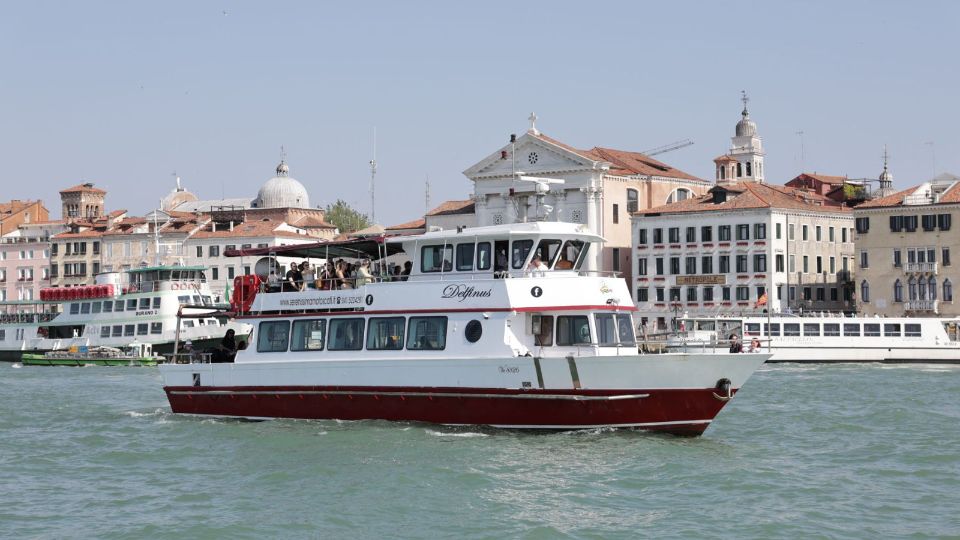
Your journey through the lagoon likely begins on a motoscafo—a motorboat. But in Venice, a motoscafo isn’t just a boat; it’s an everyday lifeline. These sleek vessels are the taxis, buses, and delivery trucks of the canals.
Fun fact: The term combines moto (motor) and scafo (hull), and was first used in Venice in the early 20th century, around the same time Serenissima Motoscafi began offering organized tours in 1924.
2. Bragozzo
A traditional wooden fishing boat, the bragozzo has two sails and a colorful painted prow. Once a common sight across the Adriatic, it’s now a rare treat seen in special events or heritage tours.
Why it matters: Some Venice boat tours still feature these beauties on special routes. They reflect the artisanal maritime culture that flourished before motorized vessels.
3. Bricola
No, it’s not a snack. A bricola (plural bricole) is a group of wooden poles sticking out of the water, marking navigable routes in the lagoon. They guide boats safely between sandbanks (barene).
Lagoon lore: Bricole are made from oak or larch, and get covered with mussels and algae over time—local birds love them.
4. Barena
The barena is a salt marsh, visible at low tide and hidden at high. It’s a fragile ecosystem and a tricky spot for boaters unfamiliar with the lagoon.
Sailor’s secret: Many a boatman has “kissed a barena” by running aground during a foggy day.
5. Canale della Giudecca
This isn’t just a stretch of water—it’s Venice’s “grand boulevard” for larger vessels. Many Venice boat tours glide through here, offering panoramic views of the Giudecca island and the historic Zattere promenade.
Navigation tip: The Canale della Giudecca is one of the few places in Venice where larger motorboats and ferries can safely cruise at higher speeds.
6. Marangona
Originally, this was the big bell in the Campanile di San Marco, used to call shipbuilders (marangoni) to work. While not a boating term per se, it’s closely tied to the maritime rhythm of Venice.
Sound of the sea: When the Marangona rang, it was time to launch or repair a ship—Venetian productivity, 14th-century style.
7. Tòco de remo
Literally “a hit from an oar.” Used jokingly (or not) when someone misbehaves on a boat.
Phrase in use: “Se no te stè bona, te dà un tòco de remo!” (Behave or I’ll give you a whack with the oar!)
8. Murazzi
These are the massive Istrian stone barriers built to protect the lagoon from the open Adriatic Sea. Found on islands like Pellestrina and Lido, the murazzi are engineering marvels from the 18th century.
Still standing: Despite centuries of waves, storms, and tourists, the murazzi remain a crucial part of Venice’s defense system.
9. Bora e Scirocco
Local winds with a mind of their own. The Bora is cold and dry from the northeast; the Scirocco is warm and moist from the southeast. Both can make or break a day on the water.
Venetian wisdom: Always ask a local skipper about the wind—it’s the difference between a perfect cruise and a “splashy” disaster.
10. Navigar tra i ghebi
Literally “sailing among the little channels.” A poetic phrase Venetians use for navigating the labyrinthine, often hidden waterways of the lagoon.
Ultimate Venice boat tour: If you ever hear this expression from your guide, get ready for an unforgettable adventure far from the tourist crowds.
Speak Lagoon, Sail Happy
Understanding the secret vocabulary of the lagoon adds a whole new layer of magic to your Venice boat tours. Whether you’re gliding past bricole or whispering through ghebi, you’re not just sightseeing—you’re speaking the language of the water.
And remember: next time you hop on a motoscafo, salute the skipper with a smile and say, “Navigar tra i ghebi oggi?”
Buon viaggio.