When you visit Murano, glass is probably the first thing that comes to mind. For centuries, the island has been synonymous with furnaces, master glassmakers and one of Venice’s most celebrated artistic traditions.
But there is another Murano landmark that visitors often see before they even set foot on the island.
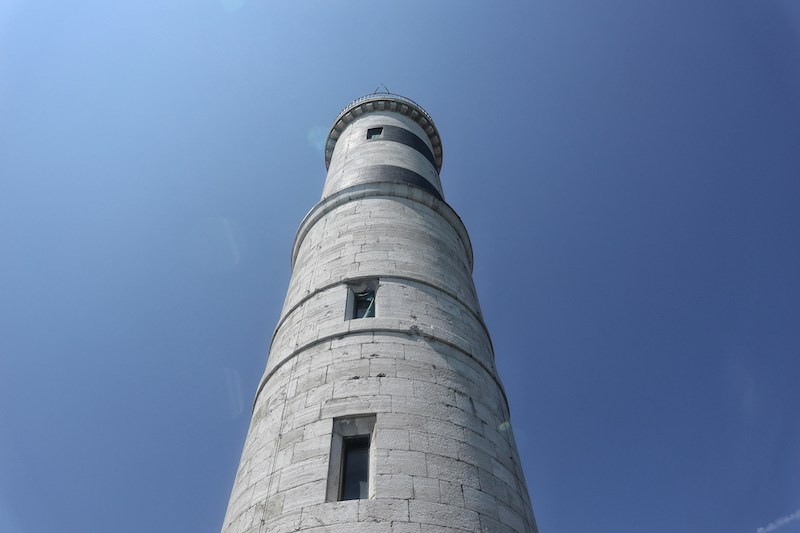
Standing at the edge of the lagoon, with its unmistakable white silhouette, the Faro di Murano has long been part of the island’s relationship with the water.
It may not be as famous as Murano glass, but the lighthouse tells another side of the island’s story: one of boats, navigation and a community that has always depended on the Venetian Lagoon.
So, when you visit Murano, take a moment to look beyond the glass shops and furnaces. The lighthouse is a perfect place to begin.
The Faro di Murano: A Landmark on the Lagoon
The Faro di Murano, or Murano Lighthouse, stands on the eastern side of the island, overlooking the waters of the Venetian Lagoon.
Its white cylindrical tower is easily recognisable, particularly when seen from the water. At the top, dark horizontal bands and the lantern create the distinctive appearance that makes the lighthouse stand out against Murano’s lower skyline.
For travellers arriving by boat, it is one of those landmarks that immediately raises a question: why does an island so close to Venice need a lighthouse?
The answer lies in the unique geography of the lagoon.
What may appear to visitors as a large expanse of open water is actually a complex environment of navigable channels, shallow areas, islands and tidal landscapes. For centuries, understanding these waters has been essential for anyone travelling between Venice and the surrounding islands.
The lighthouse became part of this world of navigation, helping mark Murano’s position along important lagoon routes.
The Lighthouse You See Today Was Not the First
The history of the Faro di Murano is more interesting than its modern appearance might suggest.
Before the present structure was built, Murano already had a light used as a reference for navigation. Earlier versions were very different from the lighthouse visitors recognise today.
Over time, as navigation evolved, the structure was changed and modernised. The current lighthouse dates to the 20th century and replaced an earlier iron construction.
Its appearance is relatively simple compared with Venice’s elaborate palaces and churches, but that is precisely what makes it interesting. The Faro di Murano was not designed as a monument.
It had a practical purpose.
And today, that practical piece of lagoon infrastructure has become one of Murano’s most recognisable landmarks.
Why a Lighthouse Matters in the Venetian Lagoon
To understand the Faro di Murano, it helps to understand the lagoon itself.
The Venetian Lagoon is not a conventional stretch of sea. Its landscape is constantly influenced by tides, currents and changing water levels. Beneath the surface, depths can vary considerably, making established navigation channels particularly important.
This is why travelling through the lagoon reveals so many signs connected to navigation.
Visitors may notice wooden poles rising from the water, channel markers and other reference points along the journey. These elements form part of a centuries-old relationship between Venetians and their aquatic environment.
The Faro di Murano belongs to that same story.
It reminds us that Murano has never existed in isolation. Its history has always been connected to Venice and the other lagoon islands through the water.
Visit Murano and Discover More Than Glass
Of course, no visit to Murano would be complete without discovering its glassmaking tradition.
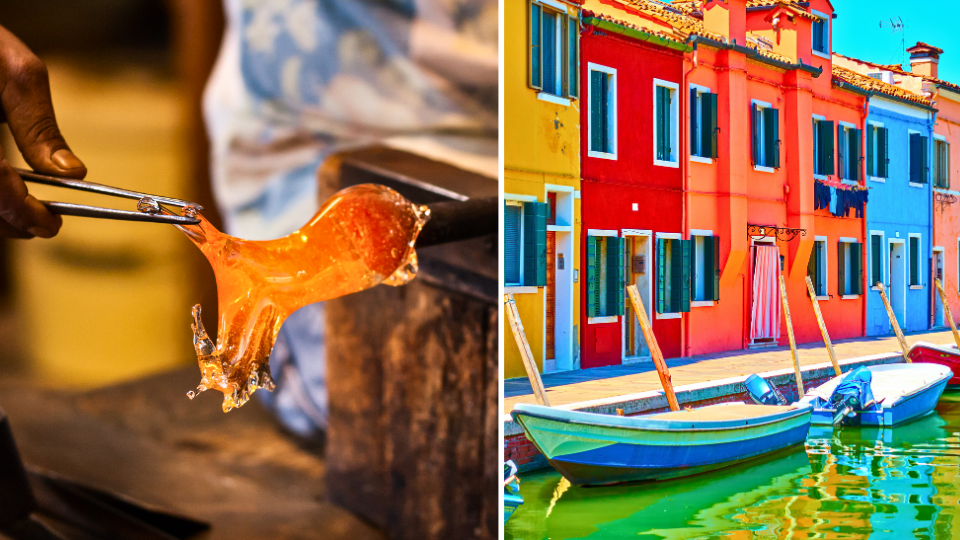
Murano’s connection with glass stretches back centuries and has shaped the island’s international identity. Generations of master glassmakers have developed techniques that transformed furnaces, minerals, heat and extraordinary skill into delicate works of art.
Visiting a glass furnace offers the opportunity to see this tradition in action. Watching molten glass being shaped by hand makes it easier to understand why Murano craftsmanship has fascinated visitors for generations.
But Murano deserves to be explored beyond its most famous product.
Walk along its canals and you will find a quieter atmosphere than in central Venice, historic buildings, bridges, churches and details that reveal the island as a living community rather than simply a destination for glass shopping.
The lighthouse is one of those details.
What Else to See When You Visit Murano
Once on the island, allow yourself some time to look around rather than moving immediately from one glass shop to another.
The Basilica dei Santi Maria e Donato is one of Murano’s most important historic buildings and is particularly known for its remarkable architecture and ancient mosaics.
The Museo del Vetro, or Glass Museum, offers another perspective on the island’s most famous craft, tracing the development of Venetian glassmaking through different periods and techniques.
Then there are Murano’s canals themselves.
They give the island a character that feels unmistakably Venetian while still being different from Venice. Smaller bridges, boats, workshops and waterfront buildings create an atmosphere worth experiencing at a slower pace.
And as you explore, remember that the island you see today developed because of its position within a much larger lagoon world.
See Murano from the Water
There is a reason the Faro di Murano works so well as an introduction to the island: it is meant to be seen from the water.
Arriving in Murano by boat changes the experience.
Instead of simply appearing at a destination, you watch the island gradually take shape in front of you. Buildings become clearer, bell towers emerge and familiar landmarks begin to define the skyline.
Among them is the white lighthouse.
It creates a visual connection between the journey and the destination, reminding visitors that in Venice, travelling across the water is not simply transportation.
It is part of discovering the place.
Visit Murano with Serenissima Tour
For more than a century, travelling through the Venetian Lagoon has been part of the story of Serenissima Tour.
Serenissima Tour is the tourism brand of Serenissima Motoscafi, the historic Venetian company whose experience in organised lagoon excursions dates back to 1924.
Today, visitors can discover Murano as part of excursions across the lagoon, with onboard hostesses and staff providing assistance and information during the journey.
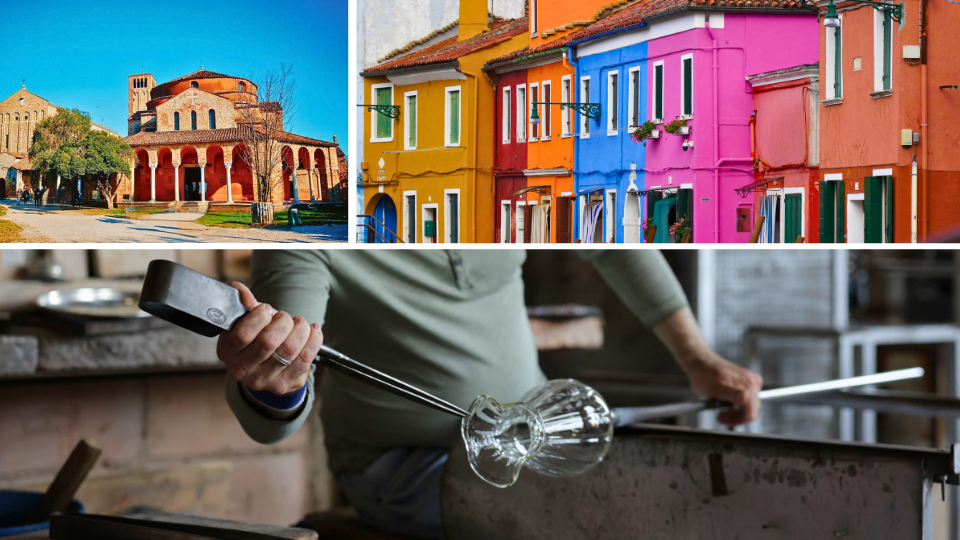
Depending on the chosen itinerary, the experience can also continue towards Burano and Torcello, revealing how each island has developed its own character, traditions and relationship with the lagoon.
And while Murano’s glassmaking heritage is undoubtedly one of the highlights, the boat journey offers something equally valuable: the chance to understand where Murano is.
From the water, you see the distance between Venice and its islands. You notice the navigation channels, the changing landscape and the landmarks that have guided people through these waters.
Including, of course, the Faro di Murano.
Look for the Lighthouse on Your Next Visit to Murano
Murano is famous around the world for glass, and rightly so. But the island becomes even more interesting when you start noticing the details beyond its most famous tradition.
The Faro di Murano is one of them.
It tells a quieter story about the island: a story of navigation, lagoon life and the importance of water in connecting Murano with Venice and the wider lagoon.
So, the next time you visit Murano, keep an eye on the view as your boat approaches.
Before the furnaces, before the glass shops and before your walk along the canals, look for the white lighthouse rising beside the lagoon.
Sometimes, discovering a destination begins before you even arrive.
Keep reading:
- Discover the Art of Murano Glass with Emmedue Murano and Serenissima exclusive Venice Boat Tours
- Murano Boat Tour Venice: The Glass Island
- Murano Made Simple: Discover Glassmaking and Island Charm with Venice Boat Tours